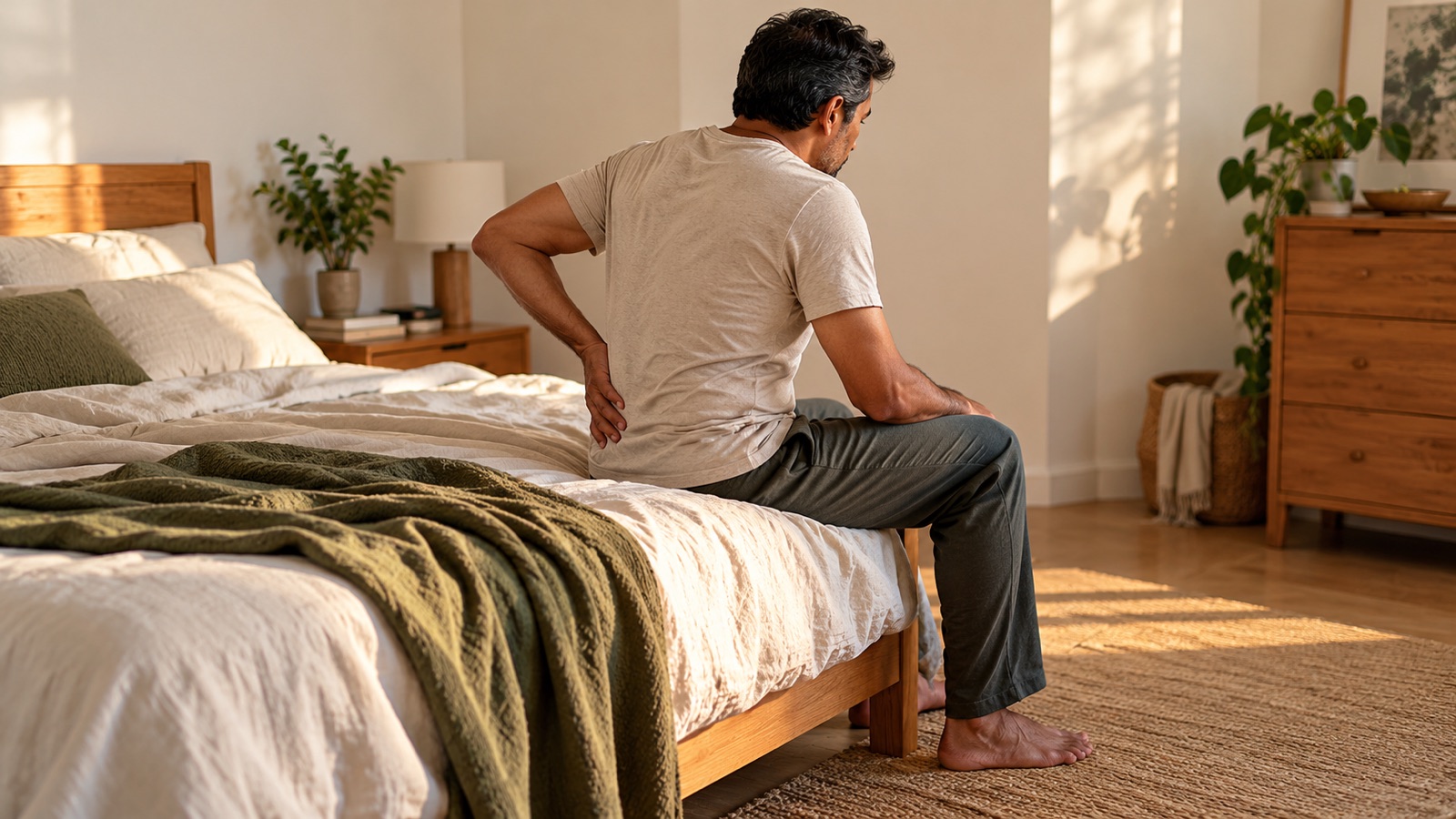
When your lower back starts playing up, even going for a walk can become a surprisingly complicated decision.
Should you keep moving? Rest? Push through the discomfort? Or is every painful step making things worse?
Then comes the advice. Walk as much as possible. Don’t walk at all. Hit 10,000 steps, preferably while bracing your core and maintaining a posture worthy of a royal portrait.
Helpful.
For most people with uncomplicated lower back pain, walking is a good place to start. But more isn’t automatically better. The useful question is how much your back can manage today—and what happens afterwards.
Is Walking Actually Good for Lower Back Pain?
Usually, yes.
The Australian Low Back Pain Clinical Care Standard encourages people to stay active or return to normal activities as soon as practical, rather than retreat into prolonged bed rest.
Walking fits nicely. It’s familiar, free, and adjustable. You can walk for three minutes instead of thirty, slow down, choose flat ground, or split one walk into several smaller ones.
But there’s an important distinction: the evidence for staying active during a new episode is stronger than the evidence that walking itself makes every new episode heal faster.
Walking isn’t a cure or a test of toughness. It’s one manageable way to keep moving.
What Does the Research Say?
A 2022 review of 19 trials involving 2,362 people found that walking or running offered small improvements in pain and disability compared with little or no intervention for persistent or recurrent lower back pain.
Some other active treatments performed better. So walking is useful, but it hasn’t won the undisputed championship of back rehabilitation.
The more interesting result comes from Australia.
The WalkBack Trial
In 2024, the WalkBack trial followed 701 adults who had recently recovered from lower back pain. One group received an individualised walking-and-education programme, supported by physiotherapy appointments. The other group received no trial treatment.
The programme reduced the relative hazard of another activity-limiting episode by 28%. The median time to recurrence was 208 days versus 112 days.
Encouraging? Absolutely.
But the participants were trying to prevent another episode. They weren’t treating a current flare-up. And because education and physiotherapy support were part of the programme, we can’t credit walking alone with the entire result.
Still, it’s a useful reminder that effective health advice doesn’t always require an expensive gadget.
How Much Should You Walk With Lower Back Pain?
There isn’t a magic step count.
Ten thousand steps might be fine for one person and far too much for another. Neither that number nor a compulsory 30-minute walk is an established treatment threshold for back pain.
Start with what you can manage and recover from.
If you comfortably walk twenty minutes already, you may not need to cut back. If ten minutes reliably leaves you sore for hours, try two to five minutes instead.
Use this simple guide:
| Your response | What to try |
|---|---|
| Comfortable throughout | Keep your usual manageable walk. |
| Mild discomfort that settles | Maintain the dose and monitor. |
| Pain builds as you walk | Slow down, shorten the route, or take a break. |
| Clearly worse long afterwards | Reduce the next walk and reassess. |
| New weakness or worsening numbness | Stop and seek medical assessment. |
This is practical guidance, not a validated pain-scoring system.
Once a distance feels manageable over several walks, increase it slightly. Five minutes might become six or seven. Or you could try a few short walks spread across the day.
There is no prize for increasing your distance every single morning.
The aim is a routine you can repeat, not one heroic effort followed by two days regretting your enthusiasm.
Does Walking Technique Matter?
You don’t need to march around with your stomach permanently braced or your shoulders pulled back like you’re reporting for duty.
There isn’t one perfect walking posture that suits everyone.
Start with a relaxed, comfortable stride. If fast walking or long steps aggravate symptoms, slow down or take shorter steps. Hills and uneven ground can make a walk more demanding, so flatter routes may be useful at first.
Wear comfortable, supportive-enough shoes for you. There’s no convincing reason to buy special footwear just because your back is sore.
And if you need a seat halfway through the walk, use one. A sensible break isn’t a failed workout.
These are options to make walking more manageable, not rules you need to follow forever.
What If Walking Makes Your Back Pain Worse?
First, more pain doesn’t automatically mean more damage. Back pain can fluctuate during recovery.
But that doesn’t mean you should ignore every response.
Imagine two walks.
On the first, your back feels a little stiff, but the discomfort stays manageable. You finish, carry on with your day, and feel roughly as you did beforehand.
On the second, pain steadily builds. You start limping or moving awkwardly, and the rest of your afternoon is noticeably worse.
Those walks are giving you different information.
For the second, try less time, flatter ground, an easier pace, or another comfortable activity for now.
I find the response after activity particularly useful. Ask yourself:
- Did symptoms settle towards their usual level?
- Could I manage normal tasks afterwards?
- How did I feel later that day or the next morning?
You don’t need every symptom to vanish within a rigid 24-hour window. You’re looking for a dose you can tolerate without repeatedly making things substantially worse.
A good walk isn’t the longest one you can force yourself to finish. It’s one you can recover from.
Should You Walk During a Back Pain Flare-Up?
Often, yes—but lower your expectations.
A few minutes around the house or garden may be enough initially. You don’t need to finish your usual circuit just because your fitness watch expects it.
Rest and movement aren’t opposing teams. You can reduce irritating activities, take comfortable breaks, and still keep some movement in your day.
For the first couple of days, see Back Pain Flare-Up: What To Do First Without Making It Worse.
What If Walking Sends Pain Down Your Leg?
Pain into the buttock or leg can happen with sciatica and other conditions. Some people tolerate walking well; others find standing or walking increases leg symptoms, sometimes relieved by sitting or leaning forward.
Don’t keep extending your walks to prove a point. Persistent or worsening leg symptoms deserve assessment, particularly if you develop numbness or weakness.
How Do You Know Walking Is Helping?
Pain relief isn’t the only measure.
Maybe the same route feels easier. You can walk further without a setback. Symptoms settle faster. You’re less hesitant to leave the house or move normally.
Those improvements count.
They don’t prove walking alone caused your recovery, but better activity tolerance is still worth celebrating.
For a broader picture, read How Long Does Lower Back Pain Last? A Realistic Recovery Timeline.
Is Walking Enough to Strengthen Your Back?
Walking supports activity and endurance, but it isn’t a complete replacement for resistance training.
As symptoms settle, appropriately dosed strength exercises may help you develop the capacity for lifting, carrying, and other everyday demands.
That doesn’t mean everyone with back pain has a weak core. It means strength is another useful tool, not a diagnosis.
If you’re unsure where to begin, see Strength Training After 40: What Actually Matters?.
When Should You Stop Walking and Get Help?
Most uncomplicated back pain isn’t an emergency, but some symptoms need prompt action.
Seek emergency medical care for new difficulty passing urine, loss of bladder or bowel control, numbness around the genitals or saddle area, or severe or rapidly worsening leg weakness. Don’t wait for all these symptoms to appear together.
Get prompt medical assessment after significant trauma, or for severe or rapidly worsening pain, fever or feeling very unwell, or new unexplained pain alongside a relevant cancer history.
Also arrange a review if walking repeatedly makes symptoms substantially worse despite adjustments, leg symptoms persist or worsen, or pain is preventing normal life.
You don’t need another fortnight of guessing before asking for help.
A Few Quick Questions
Should I Walk Every Day?
Not necessarily. Regular movement is useful, but daily walking isn’t compulsory during a painful episode. Start with a manageable frequency.
Is Walking Better Than Bed Rest?
For most uncomplicated lower back pain, staying active is generally preferable to prolonged bed rest. Short, comfortable rests are fine.
Can Walking Prevent Back Pain Returning?
The WalkBack trial suggests an individualised walking-and-education programme can lower recurrence risk. It doesn’t guarantee that another episode won’t happen.
Final Thought: Walk More Sensibly, Not Just More
Walking doesn’t need to become another complicated health project.
If it feels manageable, keep going. If you’re progressing, build gradually. If symptoms repeatedly flare, change the dose. And if something feels unusual or keeps worsening, get it checked.
Your back doesn’t need a perfect step count.
It needs movement it can currently handle, with room to build from there.
The goal isn’t to prove how far you can walk despite your back pain. It’s to make walking—and life in general—feel easier again.